Dunwoody, GA · Polybutylene · Galvanized · Copper
Whole-House Repiping in Dunwoody, GA
A third pinhole leak in a year, brown water from every tap or gray plastic pipe stamped PB2110 means the plumbing itself is wearing out, not just one fitting. Dunwoody Plumbing Co. identifies what pipe your home actually has, then prices targeted repairs against a whole-house repipe in PEX or copper, for one flat price agreed before any wall is opened.
- Polybutylene, galvanized and pinhole-prone copper replaced
- PEX-A, PEX-B or Type L copper, priced side by side
- New shutoff valve at every fixture
- Most whole-house repipes finished in one full day
Get a quote
Tell us what is going on. We call back with a time and a price range.
- Master PlumberGeorgia-licensed
- $49 Service CallWaived if you approve the same day
- Free Pressure CheckOn every visit
- FinancingPay monthly on bigger jobs
Signs a Dunwoody home is due for new pipes
Pinhole leaks that keep coming back
Copper can pit from the inside, especially where water moves fast or the pipe was undersized. One pinhole is a repair; three in different rooms means the walls are thinning everywhere. If the water bill jumped but nothing looks wet, pinpoint the hidden leak first so you know what you are dealing with.
Brown or rusty water from hot and cold taps
Galvanized steel rusts from the inside, and the flakes break loose when water use spikes. Rust in both hot and cold lines points to the pipes. Rust only on the hot side usually means the water heater tank is corroding instead.
One bathroom has weak pressure, the rest are fine
Scale inside old galvanized pipe narrows the branch feeding that room until only a trickle gets through. If every fixture in the house is weak at once, the cause is more often the pressure regulator or the line from the meter.
Gray, blue or black plastic pipe stamped PB2110
That is polybutylene, installed in many homes from about 1978 to 1996. It breaks down from the inside with no outward warning, and the plastic or crimped fittings are the most common failure point.
Ceiling stains under a bathroom or laundry room
Old supply lines tend to fail at fittings and elbows hidden in the floor framing. Patching one stain at a time works for a while, but repeated stains in different places usually mean the whole system is aging out.
An inspector, buyer or insurer flagged your plumbing
Home inspection reports routinely call out polybutylene and galvanized supply lines, and some insurers ask about pipe material before writing or renewing a policy. A repipe resolves the finding instead of leaving it for the next sale.
Spot repair or whole-house repipe?
Not every leak means new plumbing. The pipe material, how many leaks you have had and where they are decide it, and we show you the pipe before recommending either route.
A spot repair makes sense when
- It is a single leak from a nail, freeze or physical damage
- The pipe is copper or PEX that looks sound on both sides of the leak
- One failed valve, fitting or water heater connector is the whole problem
- You are only remodeling one bathroom or the kitchen
A whole-house repipe makes sense when
- The home has polybutylene anywhere in the supply plumbing
- Galvanized lines are rusting or choking off pressure
- Copper has had two or more pinhole leaks in different spots
- A sale, insurance renewal or major remodel is coming up
Ready to replace the system? request a repipe quote.
How a repipe works, start to finish
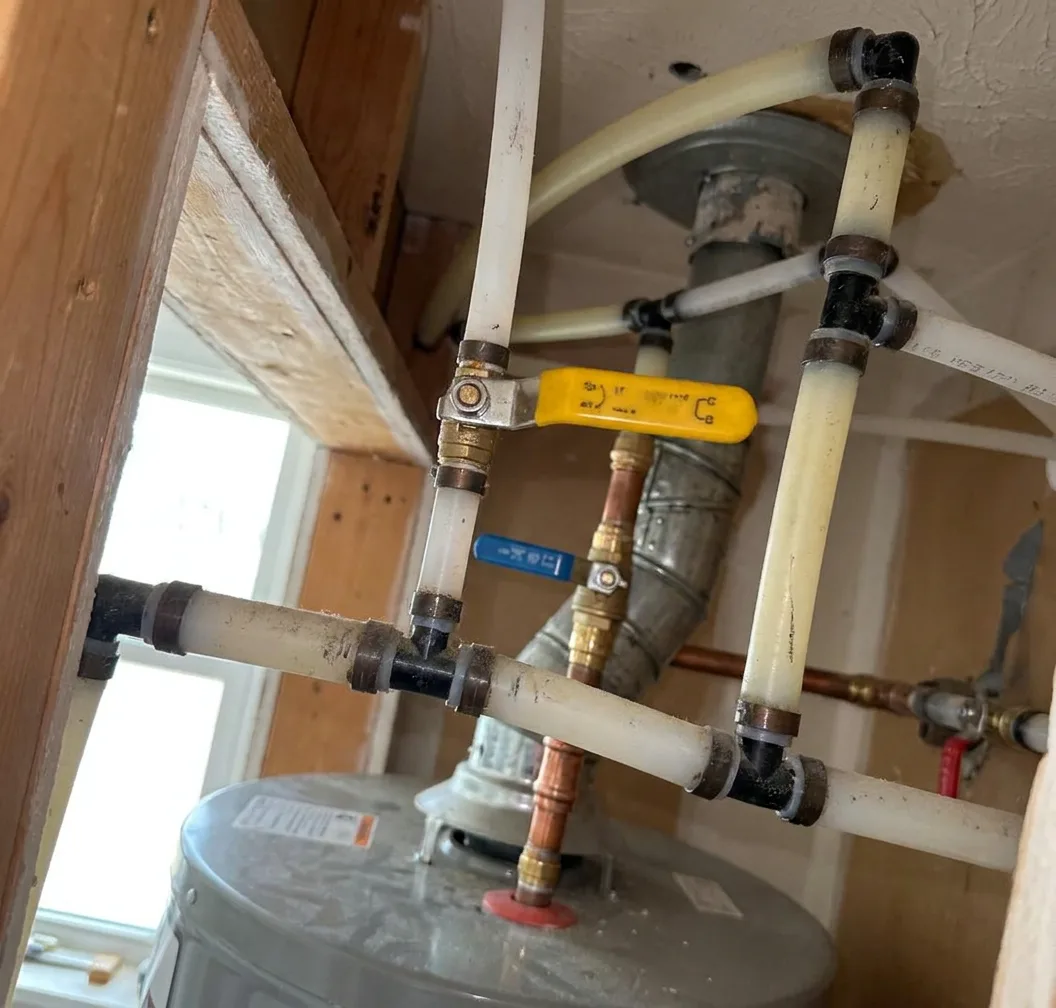
- When we call you back we ask about the home's age, the number of bathrooms and what the pipes are doing. Photos of the pipe near the water heater or main shutoff help us identify the material before the visit.
- At the walkthrough we confirm the pipe type, trace the main runs through the basement, crawlspace or attic, and mark where small access openings will go, usually closets, ceilings below bathrooms and behind fixtures.
- You get one flat price for PEX and, when it makes sense, copper, agreed before any wall is opened. Monthly financing through Wisetack is available.
- On the day, we protect floors and furniture, make small clean cuts where the lines need to run, install the new supply lines and fit a new shutoff valve at each fixture. Most whole-house repipes are finished in one full day.
- The new system is pressure tested and the old pipes are taken out of use. Drywall patching is not part of the job, so we refer you to a drywall company we trust, and the clean cuts mean the patching goes quickly. If the old metal pipe was part of the home's electrical grounding, we flag it so an electrician can restore the bond.
What it costs: Cost depends mostly on the number of bathrooms, stories and how easy the runs are to reach. Atlanta-area whole-house repipes in PEX commonly run about $4,500 to $15,000 for a single-family home, and copper usually costs noticeably more for the same layout. You get one flat price before work starts, and Wisetack financing brings most jobs to around $150 a month with approved credit.
Get a price for your homePipe, fitting and valve brands we install
Brands
- Uponor
- Viega
- Zurn
- NIBCO
- Sioux Chief
- Mueller Streamline
- Cerro
- Apollo
Common parts we replace
- PEX-A tubing & expansion rings
- PEX-B tubing & crimp or clamp rings
- Press fittings
- Type L & Type M copper
- Manifolds with individual shutoffs
- Quarter-turn fixture stop valves
- Main shutoff valves
- Dielectric transition fittings
Why so many Dunwoody homes are candidates
Most of Dunwoody’s roughly 21,500 homes were built between 1970 and 1999, and that window lines up almost exactly with the years polybutylene was sold, about 1978 to 1996. The roughly 14% built between 1940 and 1969 often carry original galvanized or first-generation copper instead, and many houses have a mix after decades of partial fixes. In neighborhoods like Dunwoody Club Forest, Wyntercreek or Brooke Ridge, two houses on the same street can have completely different plumbing, so the only way to know is to look at the pipe.
A repipe covers the plumbing inside the house, but polybutylene was also buried in yards as the service line from the DeKalb County meter. If yours is still original, it is worth checking during the same project, since that is a separate line replacement from the meter to the house along with the pressure-reducing valve the county requires. DeKalb’s main replacement work and pressure surges after repairs on roads like Chamblee Dunwoody Rd put extra stress on aging pipe on both sides of that valve.
We plan and price repipes across Dunwoody, from Dunwoody Village and Georgetown to Dunwoody Club Forest and Wyntercreek. See everything we handle on our Dunwoody plumbing home page, or read through common questions Dunwoody homeowners ask.
Repiping questions from Dunwoody homeowners
How do I know if my Dunwoody home has polybutylene pipe?
Look at the supply pipes near the water heater, under sinks and at the main shutoff. Polybutylene is usually gray, sometimes blue or black, slightly flexible, and often stamped PB2110 or QEST, with gray plastic or copper crimp fittings. Gray PVC can look similar, so if you are not sure, send a photo with the form and we will tell you what it is.
Will polybutylene pipes affect my insurance or home sale?
They can. Some insurers ask about polybutylene and may decline or surcharge a policy, and buyers' inspectors almost always flag it, which often leads to price negotiations or a repair credit. Repiping before you list removes the issue from the inspection report.
Should I repipe with PEX or copper?
PEX is the most common choice for repipes because it costs less, needs fewer fittings and snakes through finished walls with smaller openings. Copper lasts a long time and some owners prefer it, but it takes more labor and more wall access. We price both so you can compare.
What is the difference between PEX-A and PEX-B?
PEX-A, such as Uponor, is more flexible and uses expansion fittings that keep the full inside diameter of the pipe, so flow is slightly better. PEX-B, made by brands like Viega and Zurn, uses crimp, clamp or press fittings and costs less. Both are approved for drinking water; the key is using the fitting system the pipe manufacturer specifies.
How long does a repipe take, and can we stay in the house?
Most whole-house repipes take one full day. You can stay home, but plan on the water being off for most of that day while the new lines are connected.
Will you have to cut into my walls, and who patches them?
Yes, but far less than most people expect. New lines go through small, clean cuts, often in closets, ceilings below bathrooms and behind fixtures. Drywall patching is not included, so we refer you to a drywall company we trust, and the clean cuts make that repair quick.
Is a repipe warrantied?
Yes. A repipe carries our workmanship warranty plus the pipe and fitting manufacturer's warranty. Spot repairs on old polybutylene are the exception, because the material keeps failing, which is one more reason a full repipe is usually the better spend.
Can a townhome be repiped?
Yes. Check your association's declaration first, because it defines which pipes belong to your unit and which are shared, and many associations want notice before walls are opened. We do not work above the second floor of condo or apartment buildings, or in high-rises.
Stop patching the same pipes
Send the form with your home's age and what the pipes are doing, and we will call back to set up a walkthrough and a written price.