Dunwoody, GA · Service Lines · PRVs · Water Pressure
Water Line & Pressure Regulator Repair in Dunwoody, GA
Weak showers, pipes that bang when a faucet shuts off, or a wet patch of lawn between the street and the house usually trace back to one of two parts: the pressure-reducing valve or the buried water line from the DeKalb meter. Dunwoody Plumbing Co. puts a gauge on the system, finds which one failed, and repairs or replaces only that piece.
- Free water pressure check on every visit
- PRV rebuilds and replacements, set and tested on site
- Service line repairs, or one continuous new pipe from meter to house
Get a quote
Tell us what is going on. We call back with a time and a price range.
- Master PlumberGeorgia-licensed
- $49 Service CallWaived if you approve the same day
- Free Pressure CheckOn every visit
- FinancingPay monthly on bigger jobs
What low, high or missing water pressure is telling you
Weak pressure at every faucet
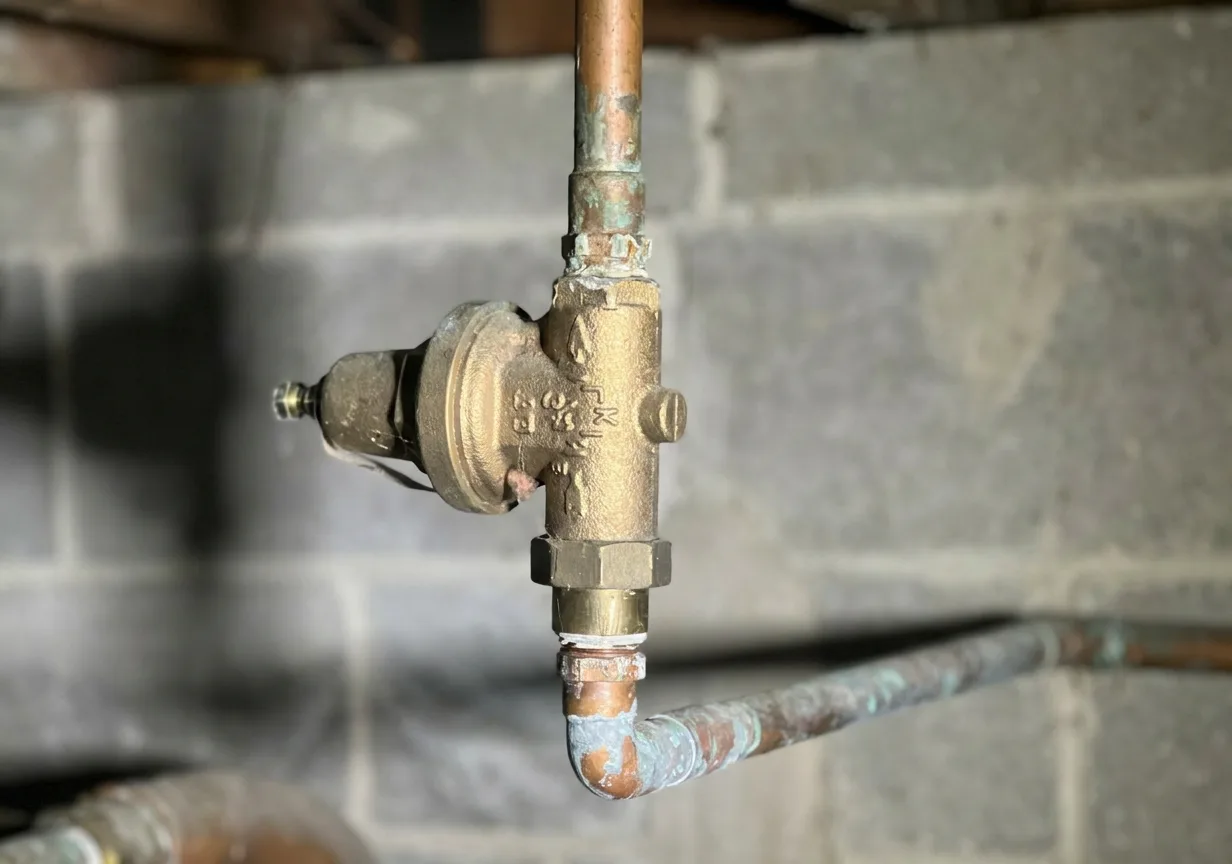
A pressure-reducing valve with a worn spring or seat can choke flow to the whole house. A half-closed main shutoff or a leak on the service line bleeding off pressure does the same. If only one fixture is weak, look at its aerator or cartridge, not the line.
Pressure jumped after county work on the street
A new DeKalb main can deliver more pressure than the old one, and reconnecting meters pushes air and surges into the house that can finish off an aging regulator. A gauge reading above 80 psi means the PRV is no longer doing its job.
Banging pipes, dripping faucets, a toilet that keeps refilling
Pressure that is too high hammers every valve in the house each time one closes. Fixing the regulator removes the cause, though worn parts such as toilet fill valves and faucet cartridges may still need replacing afterward.
A soggy spot or sinking patch between the meter and the house
Usually a leak in the buried service line, often at an old fitting or a cracked section of polybutylene or galvanized pipe. If the yard is dry but the meter keeps turning with everything off, pinpointing where the hidden leak is comes before any digging.
Pressure creeps up overnight or the water heater relief valve drips
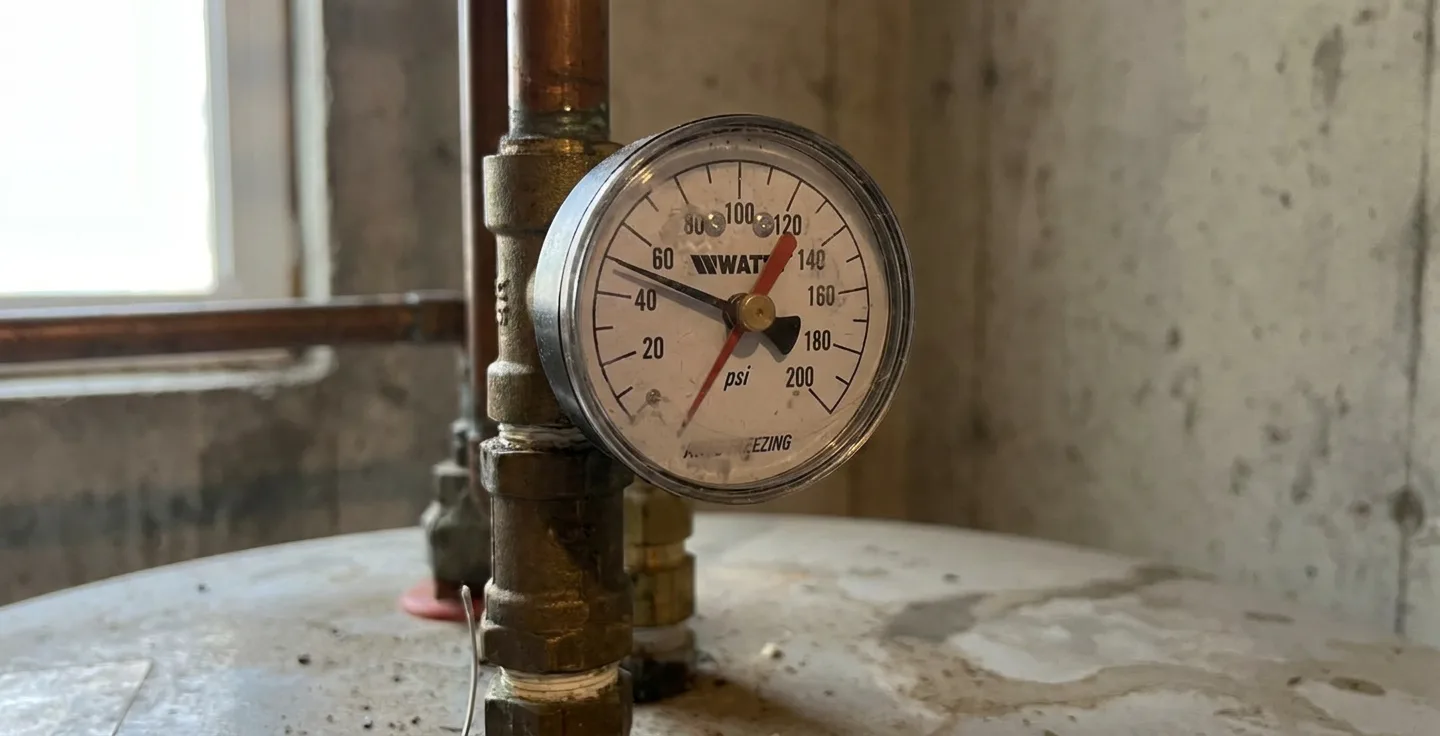
A working PRV makes the house a closed system, so pressure climbs every time the water heater runs. That points to a failed or missing expansion tank at the water heater rather than the regulator, and a gauge with a max-reading needle tells the two apart.
No water, or taps that sputter and spit air
If the neighbors are out too, it is likely a DeKalb main break or shutoff, so call the county at 770-270-6243. If only your house is dry, the cause is on your side - a closed valve, a PRV stuck shut or a broken service line. Sputtering after service returns is trapped air that clears once cold taps run.
Repair or replace: the service line and the regulator
These are two separate decisions. A buried line with one bad fitting rarely needs replacing end to end, and a regulator with a sound body can sometimes take a rebuild kit. Pipe material, valve age and how many failures have already happened decide it.
A spot repair or PRV rebuild makes sense when...
- The line is copper, PEX or HDPE and the leak is one fitting or one damaged section
- It is the first leak on that line, caused by digging, a root or a single bad joint
- The PRV is under about 10 years old with a clean, uncorroded body - a cartridge or rebuild kit restores it
- The regulator works but is set too high or too low and just needs adjusting
Replace the whole line or valve when...
- The service line is polybutylene or galvanized steel, where patches buy little time
- The same line has leaked two or three times
- Flow has faded over the years because rust has narrowed a galvanized line
- The PRV is original to a 1980s or 1990s house, leaks from the body or will not hold a setting
- Rebuild parts for the old valve are no longer made
How a water pressure or water line visit works
- When we call back, we ask what you are seeing, when it started, whether DeKalb crews worked on your street, and where your meter and regulator are.
- On site we put a gauge on the system to read the pressure - a free check on every visit - inspect the PRV, main shutoff and expansion tank, and watch the meter's leak indicator with every fixture off. For a yard leak we start close to the house and work back toward the meter.
- You get the diagnosis and a price before work starts, with repair and replacement side by side when both are reasonable.
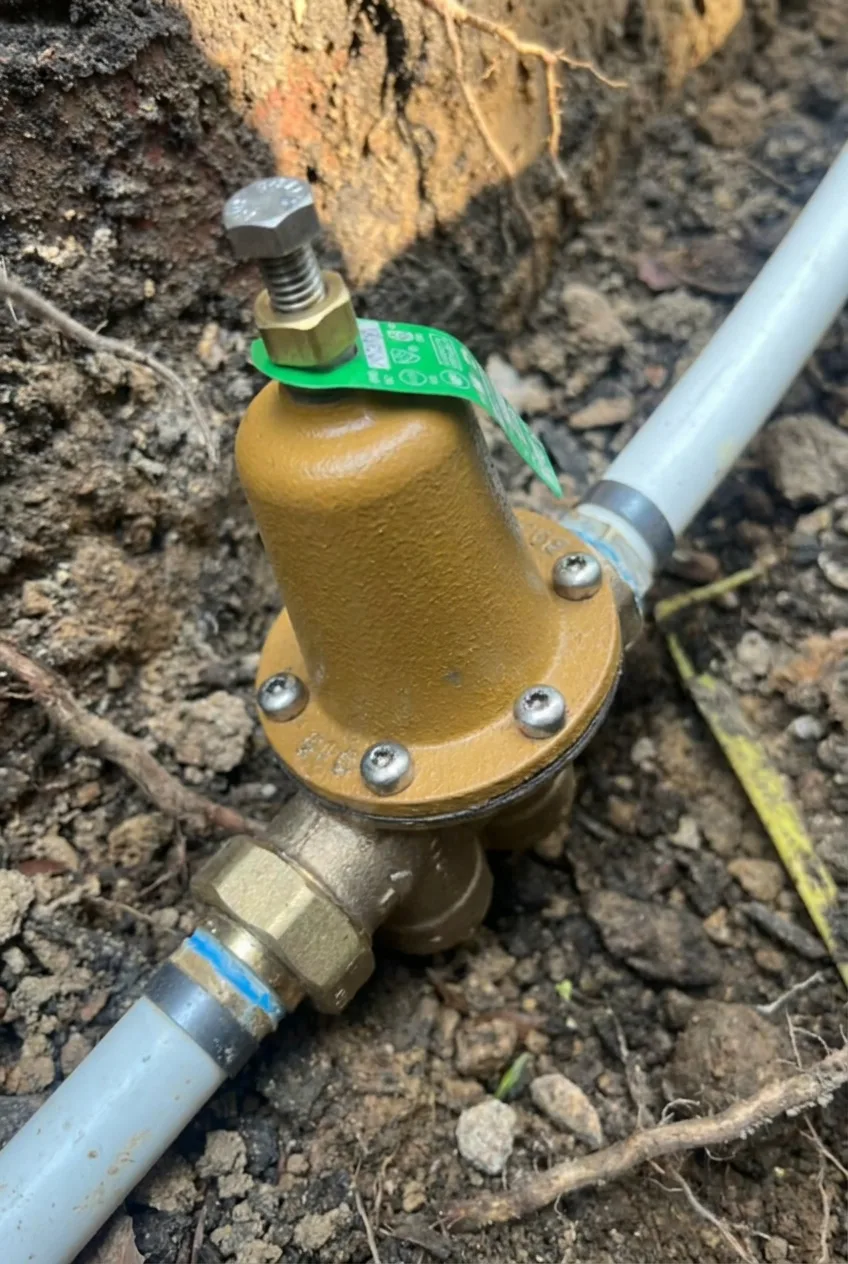
- A PRV swap on an accessible line is usually a few hours of work. For a full service line replacement, the route is trenched, sidewalks and driveways are crossed by digging on both sides and directional drilling underneath in short sections, and the new pipe runs as one continuous length from a single connection at the meter all the way into the house - no fittings buried in the yard.
- A new line ends at a new main shutoff valve and a new regulator. We set the pressure, confirm it with the gauge, check the meter shows no flow, purge air from the lines and clean up.
What it costs: A PRV replacement on an accessible line commonly runs about $300 to $700 installed, more when the valve is buried or in a tight crawlspace, and a rebuild kit costs less when the body is sound. Service line work is priced by length, depth and what has to be crossed, often in the range of $50 to $250 per foot. You get an exact price before work starts.
Get a price for your homeRegulators, valves and pipe we work with
Brands
- Watts
- Zurn Wilkins
- Honeywell Resideo
- Cash Acme
- Apollo
Common parts we replace
- Pressure-reducing valves & rebuild kits
- Hose-bib pressure gauges
- Main shutoff ball valves
- Type K copper service line
- PEX & HDPE polyethylene service line
- Brass transition & compression fittings
- Water hammer arrestors
- Hose bibs
Water lines and pressure in Dunwoody
In most Dunwoody yards the DeKalb meter sits in a pit near the street, so the private service line runs the whole length of the front yard, often under a driveway, oak roots and decades of landscaping. Homes from the 1970s through the 1990s may have copper, galvanized steel or gray polybutylene on that run, and the regulator usually sits where the line enters the house, in a basement, crawlspace or garage. When the pipe inside the walls is the same age and material as the failing line outside, it is worth pricing replacing the house plumbing in the same visit.
DeKalb has been replacing aging mains across the county, and Dunwoody has seen repeated breaks along Chamblee Dunwoody Road and near the Georgetown Shopping Plaza. Each repair and reconnection can send air and a pressure surge down the line into every house it serves. If your pressure changed right after crews worked on your street, test it before blaming the new main: often the county side is fine and a regulator that was already decades old finally gave out.
We work on service lines and regulators across Dunwoody, from Mount Vernon Lake and Redfield to Dunwoody Club Forest and Georgetown. You can see everything we fix for Dunwoody homeowners or browse answers to the plumbing questions we hear most.
Water pressure and service line questions from Dunwoody homeowners
What should my water pressure be?
Between 50 and 80 psi is a safe range. Plumbing code caps house pressure at 80 psi, which is why a regulator is required when the street supply runs higher, and water pipe repairs are only warrantied once pressure is back under 80. Every visit includes a free pressure check.
How do I check my water pressure?
Screw an inexpensive hose-bib pressure gauge from any hardware store onto the outside spigot nearest where the water line enters the house, make sure nothing else is running, and open the spigot. A gauge with a red max needle left on overnight also shows pressure spikes from thermal expansion that a single reading misses.
Who is responsible for the water line, me or DeKalb County?
DeKalb Watershed Management owns everything from the main in the street up to and including the meter, and the homeowner owns the service line from the meter to the house and all plumbing inside. A leak at the meter box or toward the street is the county's to fix at 770-270-6243; a leak in the yard or under the house is yours.
Does DeKalb County require a pressure-reducing valve?
Yes. A county ordinance requires every home to have a working pressure-reducing valve, and because it sits on the house side of the meter, keeping it working is the homeowner's responsibility. If yours is missing or has failed, it should be replaced rather than left out.
How long does a pressure-reducing valve last?
Often 10 to 15 years, and sometimes much less when pressure surges or debris from main repairs reach it. Rising pressure, a humming or chattering sound at the valve, or pressure that suddenly drops are the usual signs it is wearing out.
My pressure went wrong right after DeKalb replaced the main on my street. Who fixes it?
The county's side ends at the meter, so the regulator and plumbing inside the house are on the homeowner's side. If you believe the contractor's reconnection caused the damage, report it to DeKalb Watershed with photos and keep the plumber's invoice showing what failed.
Do you have to dig up my sidewalk or driveway to replace the water line?
Usually not. The yard is trenched, and at a sidewalk or driveway we dig on both sides and directional drill underneath in short sections. The new pipe runs in one continuous length from the meter into the house, so there are no buried connections in the yard to fail later.
How long does a water line replacement take?
Most single-family service lines are replaced in a day or two, with the water off for part of a day. Buried utilities are marked through Georgia 811 before any digging starts.
Get your water pressure back where it belongs
Send the form with what you are seeing - weak flow, banging pipes or a wet yard - and any recent county work on your street, and we will call back with next steps and a price range.